Reservoirs & Engineered Containment Structures
Water Infrastructure

Reservoirs & Engineered Containment Structures

Secure water availability without over-sizing containment

Water Management Infrastructure Engineering and Project Development Services

Our performance approach to containment design

Carrying containment intent from water balance through construction

Containment design performs best when storage duty, water chemistry, site conditions, and downstream management pathways are established from one technical basis. This allows siting, capacity, embankments, liners, subdrains, and monitoring systems to be designed around how the containment asset will actually function within the wider site.

Our integrated performance approach connects water planning, treatment, geotechnical, hydrogeological, regulatory, and construction expertise. Carrying this intent into field delivery strengthens accountability and allows unexpected subsurface conditions to be addressed without separating construction decisions from the original containment strategy.

Water Management Infrastructure Engineering and Project Development Services
service outcomes

Strengthen accountability and cost certainty

Integrated reservoir design converts site water requirements and ground conditions into containment infrastructure that can be permitted, constructed, operated, and adapted with clearer technical accountability.

Water Management Infrastructure Engineering and Project Development Services
sustained performance

Adaptive containment for evolving water management strategies

Reservoir duty can change as production, water chemistry, treatment capacity, reuse priorities, and regulatory obligations evolve. These changes may create new requirements for monitoring, treatment integration, operational support, expansion, remediation, or closure.

Our reservoir design services are supported by in-house site monitoring, water facility operations, compliance reporting, treatment upgrades, remediation, and closure planning teams. This continuity allows containment assets to be adapted or repurposed as part of the wider site water strategy rather than managed as isolated infrastructure.

Water Resource Assessments, Studies and Consulting Services

explore our latest projects

Freshwater Reservoir Design & Construction Management
Stormwater Management Infrastructure Engineering Design
Water Management Infrastructure Engineering and Project Development Services
Freshwater Storage Reservoir Inspection & Change Detection Analysis

228,500 m3 Lined Freshwater Reservoir Design and Construction Management

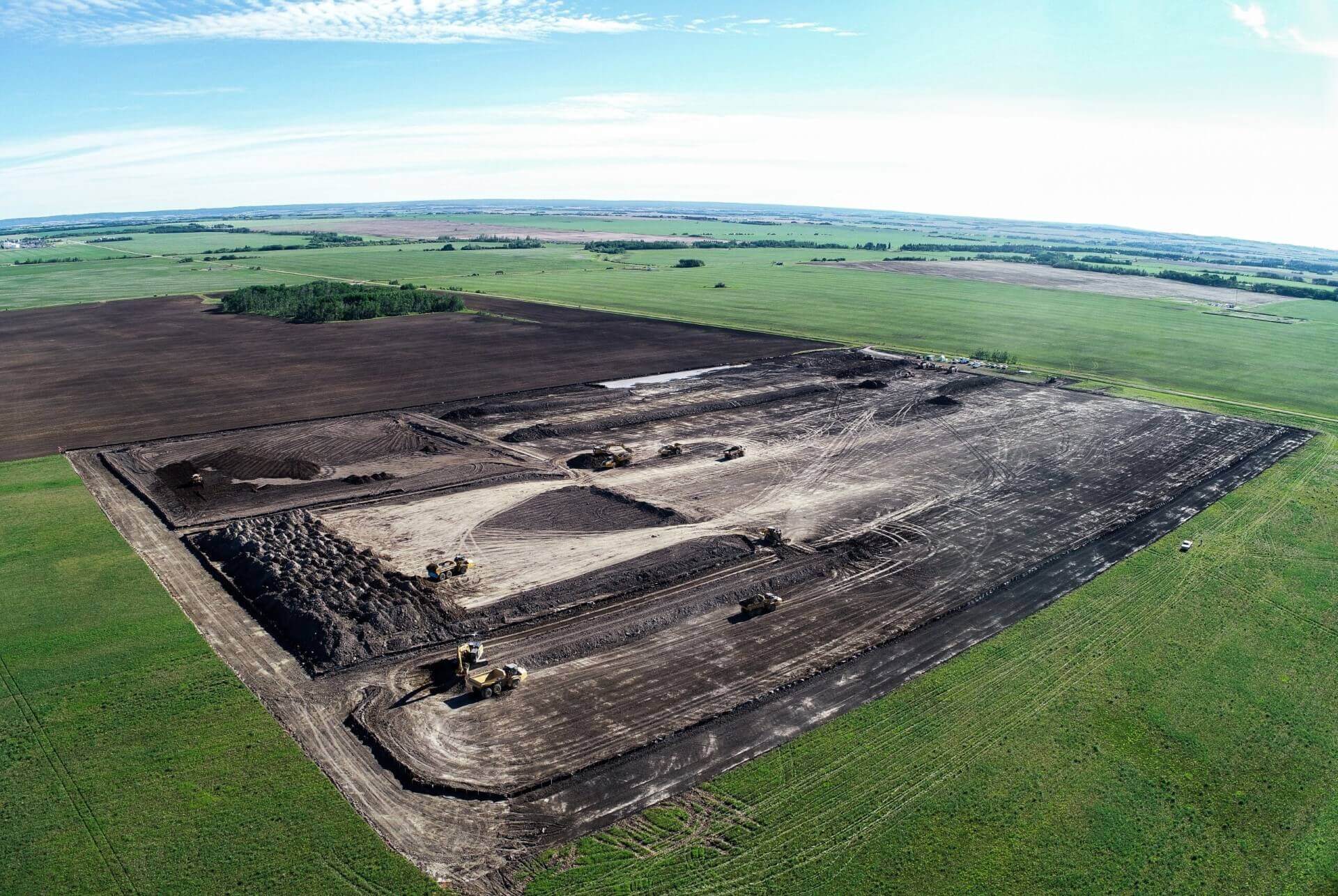
Integrated Sustainability designed and managed construction of a 228,500 m³ freshwater reservoir, integrating geotechnical investigation, water management, quality control, and on-site delivery.

3,000,000 m3 Freshwater Storage Feasibility Evaluation

Integrated Sustainability evaluated four municipal freshwater storage reservoirs up to 3,000,000 m³, covering site selection, conceptual design, dam classification, flood studies, and hydropower potential.

153,600 m3 Freshwater Reservoir Construction Support

Integrated Sustainability supported construction of a 153,600 m³ unlined freshwater reservoir, integrating geotechnical design, dam safety classification, and commissioning documentation.

Embankment Stability and Liner Integrity Assessment Using Drone Based Topographic Survey

Integrated Sustainability assessed a freshwater reservoir using visual inspection and drone-based change detection to evaluate embankment stability, liner integrity, and structural condition.
Geotechnical Design

How is containment duty established for different water streams?

Containment duty depends on the source, chemistry, variability, intended destination, and consequence of release. Produced water, tailings water, contact water, freshwater, and treated effluent may require different operating ranges, segregation, lining, monitoring, and transfer controls. The reservoir should be assessed as part of the wider water balance so storage supports defined treatment, reuse, disposal, or mitigation pathways rather than serving as an isolated volume allowance.

How are operating capacity and water levels established?

Capacity should distinguish normal operating storage from equalization, contingency, sediment, extreme-event, and unavailable volumes. These requirements are tested against credible production, seasonal, treatment, and upset scenarios. Normal ranges, warning levels, intervention thresholds, and emergency levels should each be linked to clear operating actions. A single maximum water level does not provide an adequate basis for operation.

How is the appropriate containment system selected?

Containment requirements are based on water chemistry, native soil permeability, hydrogeology, service life, groundwater interaction, and the consequence of seepage or release. These factors inform whether the asset requires natural containment, a compacted soil barrier, a clay cap, a geosynthetic liner, leak detection, or a composite system. Selection should respond to site evidence and operating duty rather than applying a standard liner specification to every reservoir.

How are unexpected subsurface conditions managed during construction?

Unexpected materials, groundwater, or foundation conditions are assessed against the original design assumptions while the work is underway. Continuity between engineering, geomatics, construction, and quality teams allows the implications for excavation, subgrade preparation, liner support, drainage, and quantities to be evaluated quickly. This integrated accountability reduces delays caused by transferring field issues between separate designers, contractors, and owners before a technical decision can be made.

Can an existing reservoir be repurposed for treatment, reuse, or a different water stream?

Yes, but suitability must be assessed against the proposed duty rather than current performance alone. The review considers containment condition, water chemistry compatibility, available capacity, hydraulic connections, monitoring systems, embankment performance, and regulatory requirements. Repurposing may require compartmentalization, liner upgrades, modified transfer infrastructure, treatment integration, remediation, or revised operating controls before the asset can support the new pathway.

Lifecycle Accountability for Industrial Water Assets

Combine deep technical expertise with execution and operational experience

Complex and high-consequence industrial projects require a practical mindset to enable agile development and positive environmental outcomes.

Our vertically integrated water services platform combines science, engineering, equipment fabrication, and operations to provide fit-for-purpose assets that drive accountability and performance.

Water Management Infrastructure Engineering & Design

Discuss containment requirements

Engage with our specialists to clarify containment intent, site feasibility, and the appropriate design and construction approach for your project.